
Trip checklists
A dialysis holiday runs better when the details are sorted before you leave home. Use this guide to work through the practical checks, then confirm final arrangements with your own renal unit and the host unit.
Start with your renal unit
Your first step is always to speak to your own renal team before making firm travel plans. They can advise whether the trip is suitable, what information the host unit is likely to need and how far ahead to start the process. Treatment slots are not booked by us. They are arranged directly between your own renal unit and the host unit, and the renal team makes the final call on timing and suitability.
In busy school holiday periods and long weekends, coast and holiday areas can fill up quickly, so it helps to begin early. That does not only apply to accommodation. Transfer times, accessible vehicle availability and session-day transport also need planning, especially if you are travelling into KwaZulu-Natal, the Western Cape, the Garden Route or the Lowveld.
- Ask your renal unit if travel is suitable for your current condition.
- Check which documents and treatment details the host unit may require.
- Confirm who at your renal unit will send information to the host unit.
- Find out how early your travel dates should be discussed.
- Keep in mind that treatment confirmation may take time, so do not leave it too late.
Get your papers and records together
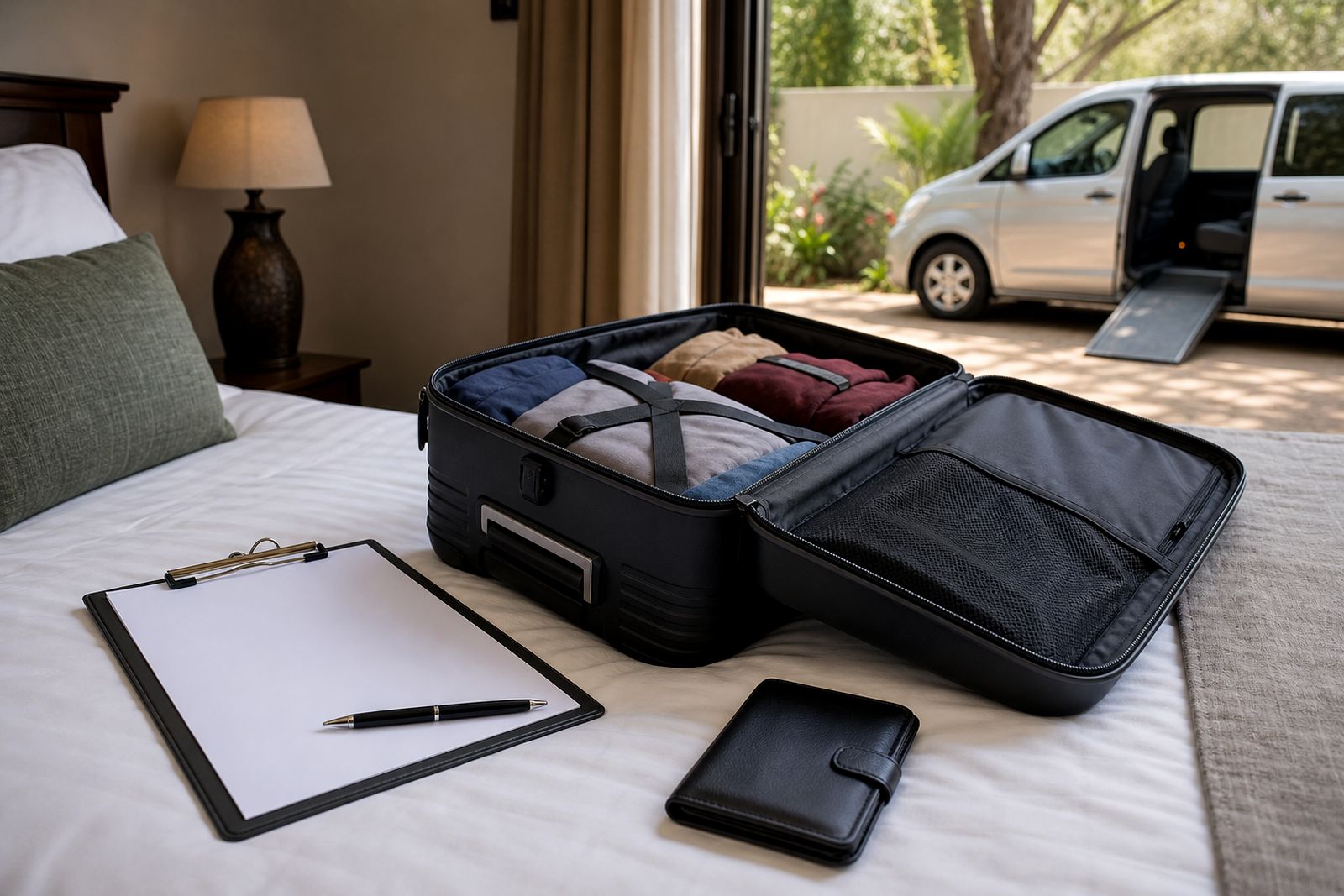
Keep your trip paperwork in one folder, whether printed or saved on your phone with paper copies as backup. When you are travelling between towns, arriving late after a flight or dealing with power cut delays, it helps to have everything easy to find. A simple folder can save stress on the day you travel.
It is also wise to carry the contact details for your own renal unit and the host unit in a place that your companion can access. If you are travelling alone, keep copies in your hand luggage and not only in a checked bag. Small admin details are easy to overlook but they matter when you are away from home.
- Identity document or passport if needed for domestic travel requirements.
- Medical aid information if applicable.
- A summary of your treatment details as provided by your renal team.
- Your regular medicine list.
- Recent blood results or other records if your renal unit advises this.
- Transfer confirmations, flight details and accommodation notes.
- Emergency contacts for your family or travelling companion.
Plan medicines and everyday health items
Do not assume you will easily replace medicines at your destination. Coastal towns can be busy in peak periods, and if you are staying outside a city centre or in a smaller Lowveld town, it may take longer to sort out something you forgot. Pack enough of your regular medicines for the full trip, plus a small buffer if your renal team says that is appropriate.
Keep essential medicines in your carry-on bag if you are flying. Checked luggage can be delayed and road transfers can run longer than expected in holiday traffic. If you use any regular non-prescription items such as skin cream, hand sanitiser or snacks that fit your eating plan, pack those as well. Coastal humidity can affect how comfortable you feel, and long travel days can be tiring so plan a bit ahead.
- Pack regular medicines in original labelled containers where possible.
- Carry enough for the trip and a little extra if advised.
- Keep essential items in hand luggage.
- Bring any items you use routinely after treatment or during travel.
- Check storage instructions before packing, especially in hot weather.
Choose accommodation with session days in mind
Where you stay matters just as much as where you are going. For many travellers, the easiest holiday is one where accommodation is close to the host unit and the route is simple. A nice sea view means less if you have a long, tiring trip across town on treatment day. In places like Durban, Cape Town and parts of the Garden Route, traffic can add more time than expected, while in the Lowveld you may be dealing with longer distances between suburbs and nearby towns.
Think about how the room works for you on ordinary days and on dialysis days. If you are travelling with a companion who is helping with bags, meals or mobility, make sure the setup is practical. Ground-floor access, a lift, a walk-in shower and enough fridge space for food planning can make the stay much easier, and a self-catering setup often helps people who need more control over meals. If power cuts are likely in the area ask about backup power for lights, charging and basic refrigeration.
Sort out meals, fluids and travel-day packing
Holiday eating is often where plans go off track, so keep things simple. Before you leave, think about what you can eat safely while travelling and what will be easy once you arrive. Airport food, padstal stops and beachfront takeaways do not always suit a renal diet, so it helps to carry a few suitable options for the road. If you are self-catering, make a short shopping list in advance rather than arriving tired and trying to figure it out at the last minute.
Pack a day bag for your journey and another smaller bag for treatment days. That way you are not repacking all the time, and your companion can also find what is needed without asking. It sounds basic but it helps a lot.
- Plan simple meals for the first day after arrival.
- Pack travel snacks that fit your eating plan.
- Carry fluids according to your usual guidance from your renal team.
- Bring a light jersey for air-conditioned flights, vehicles or treatment rooms.
- Pack chargers, a power bank and any comfort items for longer waits.
- Keep a treatment-day bag ready with documents, medicines and transfer details.
Confirm transfers and your session-day routine
Reliable transport reduces a lot of strain during a dialysis holiday. Before you leave home, confirm how you are getting from the airport or bus stop to your accommodation, and how you are getting to and from each treatment session. If you use a walker, foldable wheelchair or need extra time getting in and out of a vehicle, say so early. It is much easier to arrange the right vehicle beforehand than to fix a mismatch on the day.
Write down the expected pickup time, travel time and who is travelling with you. In bigger coastal centres, holiday traffic and rain can slow things down. In the Lowveld, afternoon storms can do the same in season. Build in a little extra time for session days so you are not rushed. The night before each session, lay out your documents, clothes and medicines, and check that your phone is charged. A calm routine makes the whole trip easier.
- Confirm airport pickup and return transfer if needed.
- Check session-day pickup points and rough travel times.
- Advise if you need space for mobility aids or extra luggage.
- Save the address of your accommodation and the host unit.
- Set reminders for session days, medicines and departure times.
- Recheck the next day's plan each evening.
What our Dialysis Holiday Planning customers say
Verified Google reviews
Questions we get asked
Do you book my dialysis sessions for me?
No. Treatment slots are arranged directly between your own renal unit and the host unit. We help with holiday planning, accommodation options, transfers and practical trip preparation.
When should I start planning a dialysis holiday?
Start as early as you can, especially for school holidays, long weekends and popular coastal periods. Treatment arrangements, accommodation close to the host unit and suitable transfers all take time to line up.
What should I carry on the day I travel?
Keep your identity document, treatment paperwork, medicine list, regular medicines, transfer details and emergency contacts with you. It also helps to carry suitable snacks, a charger and any comfort items you normally use.
Also worth a look


Plan a holiday that fits your sessions
Send a note through our contact form with where you would like to go, roughly when, and who is travelling, and we will start a trip plan with you.
Open the contact form