

Travelling with a companion
A good travel companion can make a dialysis holiday feel calmer, more organised and less tiring. The key is to agree roles early, keep plans simple and make sure the traveller's own renal unit and the host unit handle treatment arrangements directly.
Why a companion helps
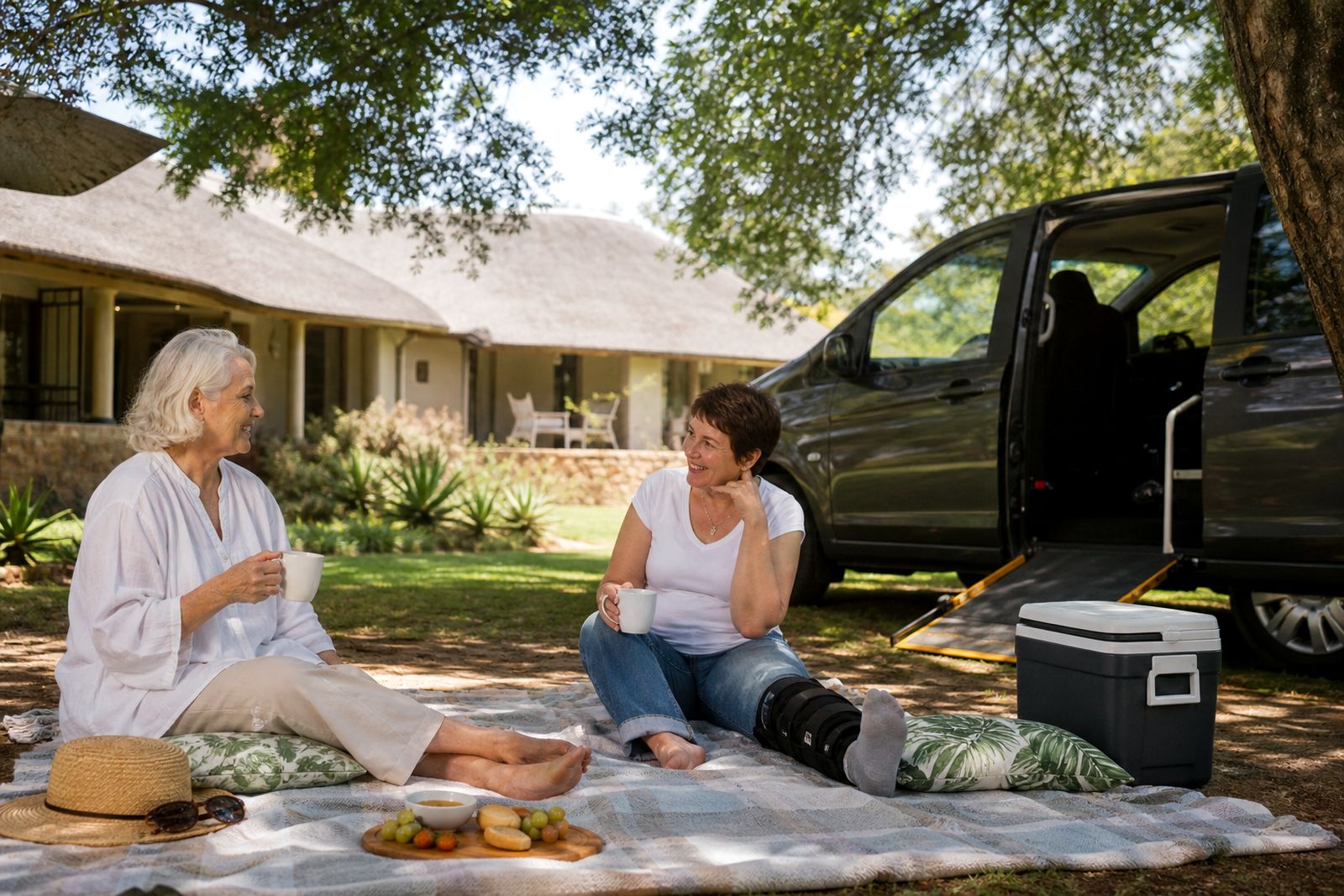
Travelling with a companion is not about turning a holiday into a medical exercise. It is about having one steady person alongside you who understands the plan, knows the timing around session days and can help with the practical parts of the trip. That can mean less rushing at airports, fewer missed details and more confidence when moving between accommodation, transfers and dialysis appointments.
A companion can also help keep the holiday balanced. On some days you may want a slow morning, a shorter outing or an earlier supper. Having somebody who expects that rhythm usually makes the trip easier for both people. This matters on coastal trips where travel times can stretch in holiday traffic, and in the Lowveld where heat can make a full day out feel longer than planned.
Most importantly, a companion does not replace the renal team. Treatment slots must still be arranged directly between the traveller's own renal unit and the host unit, and the renal team must decide whether travel is suitable. The companion supports the trip plan around that process.
Choose the right companion for the trip
The best companion is not always the person who is closest to you socially. For this kind of trip, you need someone patient, reliable and comfortable with a slower pace when needed. They should be able to follow a written itinerary, manage time on transfer days and stay calm if a pickup runs late or weather changes a day plan.
It also helps if the companion understands what the holiday is for. Some travellers want beach air and gentle sightseeing between sessions. Others want family time near the coast, or a quiet self-catering stay where meals can be planned more easily. If expectations are far apart it creates strain, so talk it through before anything is confirmed.
- Choose someone who can keep to times for airport check-in, session day transport and check-in at accommodation.
- Pick a companion who is comfortable helping with luggage and mobility needs if required.
- Make sure they can read and use the itinerary without confusion.
- Agree whether they are happy with rest periods and lighter activity on session days.
- Check that they understand treatment is arranged unit to unit, not through the holiday planner.
If more than one person wants to come, keep one person as the main companion. One clear point of support tends to work better than too many opinions.
Set roles before you leave
Many travel problems start because nobody agreed who is doing what. Before departure, split the practical tasks. The traveller may keep medical papers and personal items close at hand, while the companion manages boarding passes, transfer timing and the address details for the accommodation. This avoids last-minute searching in the airport queue or outside a lodge gate.
For road trips, decide who carries the itinerary, who checks distances between stops and who confirms pickup points. In busy coastal towns especially during peak season, small delays can stack up quickly. A clear plan helps you adjust without stress.
- The traveller keeps personal identification, medical notes requested by the renal team and daily essentials.
- The companion keeps copies of the itinerary, accommodation directions and transfer details.
- One person checks that luggage is loaded and unloaded at each stop.
- One person confirms the next day's timing each evening.
- Both people should know the name and location of the host unit for the trip.
If the traveller gets tired after a session, the companion should take the lead on the next move, whether that is getting back to the room, collecting a simple meal or delaying an outing. That small bit of structure can make the day feel much easier.
Plan session days differently
Session days need a different pace from sightseeing days. Build less into the schedule and leave room before and after transport. If your stay is on the KwaZulu-Natal or Western Cape coast, traffic near beachfront areas can be heavier than expected. In the Garden Route, distances between towns can look short on a map but still take time. In Mbombela and the wider Lowveld, heat and afternoon storms can affect the day's energy and timing.
A companion is useful here because they can protect the day from too much activity. Instead of fitting in shopping, a long lunch and a beach walk around a session, keep the plan smaller. A quiet breakfast, the treatment transfer, rest time and one short outing is often enough.
Companions also help with everyday details such as making sure there is water in the room, checking whether lifts or ramps are working and confirming the pickup point for return transport. During power cuts or generator changeovers, lifts and gate access can take longer so leave a bit more time than you think you need.
Pack and prepare as a team
Packing is smoother when the traveller and companion do it together. One person remembers clothing and comfort items, the other checks the travel file, transfer notes and room details. If you are staying in self-catering accommodation, think ahead about simple meals and storage space rather than assuming every place will suit your routine.
For coastal holidays, pack for humidity and changing sea weather. In the Lowveld, light clothing, sun protection and easy footwear usually make more sense. Keep day bags manageable. Dragging too many cases through an airport or car park is tiring for everyone.
- Keep the itinerary printed and saved on a phone.
- Pack a small day bag for transfer and session days.
- Check room access, lift access and bathroom layout before travel where possible.
- Plan simple meals and snacks that fit the traveller's normal routine.
- Carry a cardigan or light layer for cooler indoor spaces and travel legs.
- Make sure both people know the arrival plan from airport or station to accommodation.
The companion should also know where key items are packed. If the traveller needs to rest on arrival there should be no long unpacking hunt for toiletries, documents or a change of clothes.
Keep communication simple during the holiday
Good trips usually run on short, clear check-ins rather than constant discussion. At breakfast, look at the day ahead. After any transfer, confirm the next pickup time. In the evening, review the next day's outing, meal plan and session timing if relevant. This takes a few minutes and prevents confusion later.
It also helps to agree what the companion should do if the traveller feels tired or wants to change plans. Some people prefer to rest alone for an hour while the companion fetches groceries or takes a walk nearby. Others want the companion close by. Talk about that early so nobody feels awkward mid-trip.
If anything changes around treatment timing, the traveller should follow the guidance given by the renal team and the host unit. The companion can help with transport and logistics, but should not try to improvise medical arrangements. Keeping those roles clear makes the holiday feel steadier, and usually more enjoyable for both people.
What our Dialysis Holiday Planning customers say
Verified Google reviews
Questions we get asked
Does a traveller need to bring a companion on a dialysis holiday?
Not always. Some travellers are comfortable going on their own, while others prefer support with transport, luggage and day-to-day planning. It depends on the traveller's needs and what the renal team advises generally.
Can the companion arrange dialysis sessions for the traveller?
No. Treatment slots must be arranged directly between the traveller's own renal unit and the host unit. A companion can help keep papers in order and follow the itinerary, but they do not book or provide treatment.
What should a companion focus on during the trip?
The main role is practical support: keeping to timings, helping with transfers, checking accommodation access, managing luggage and keeping session days lighter. A calm routine usually helps more than a packed schedule.
Also worth a look

Plan a holiday that fits your sessions
Send a note through our contact form with where you would like to go, roughly when, and who is travelling, and we will start a trip plan with you.
Open the contact form